- What is a Condom?
A condom is a very thin sheet of latex (latex free are also available) which is placed over an erect penis. Condoms come in many different shapes, sizes and flavours.
What are the advantages?
- They are free from sexual health clinics condom pick up venues and our and condoms by post service
- They are widely available (and can be expensive if bought)
- They can help to prevent pregnancy and protect both partners from Sexually Transmitted Infections (STIs)
- They do not affect fertility
- They do not affect periods
- Side effectsare rare
What are the disadvantages?
- Putting a condom on may interrupt sex
- The man needs to withdraw as soon as he has ejaculated and before the penis goes soft, being careful not to spill any semen
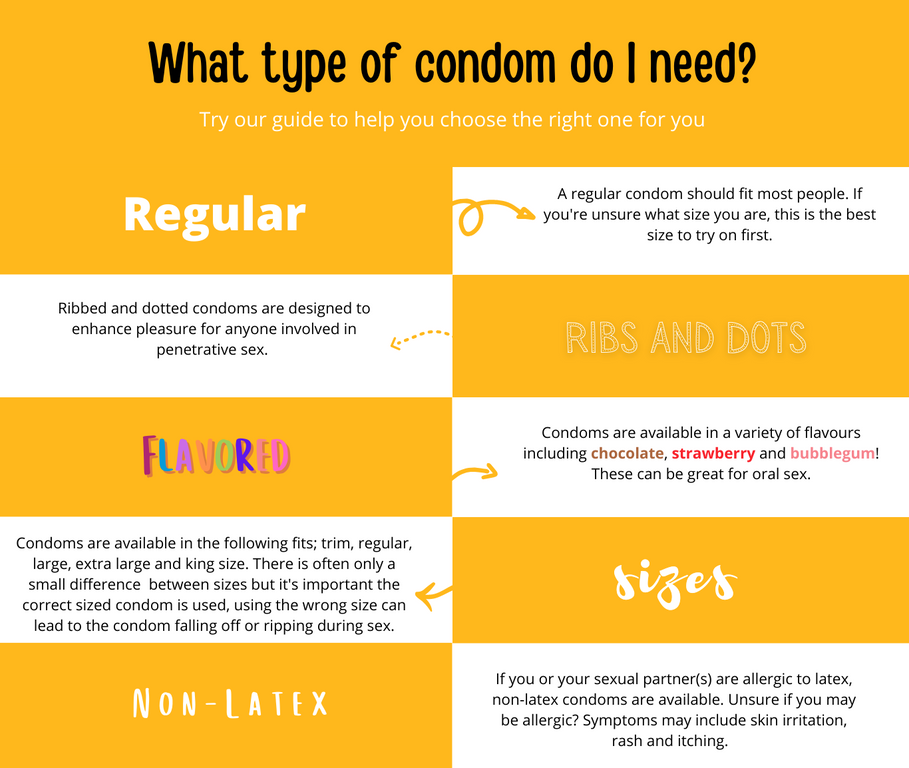
- What types of condom do I need?
A condom is a very thin sheet of latex (latex free are also available) which is placed over an erect penis. Condoms come in many different shapes, sizes and flavours.
- How effective are condoms?
If used correctly every time, condoms are 98% effective. However, with typical use they are estimated to be around 82% effective, showing the importance of using condoms correctly.
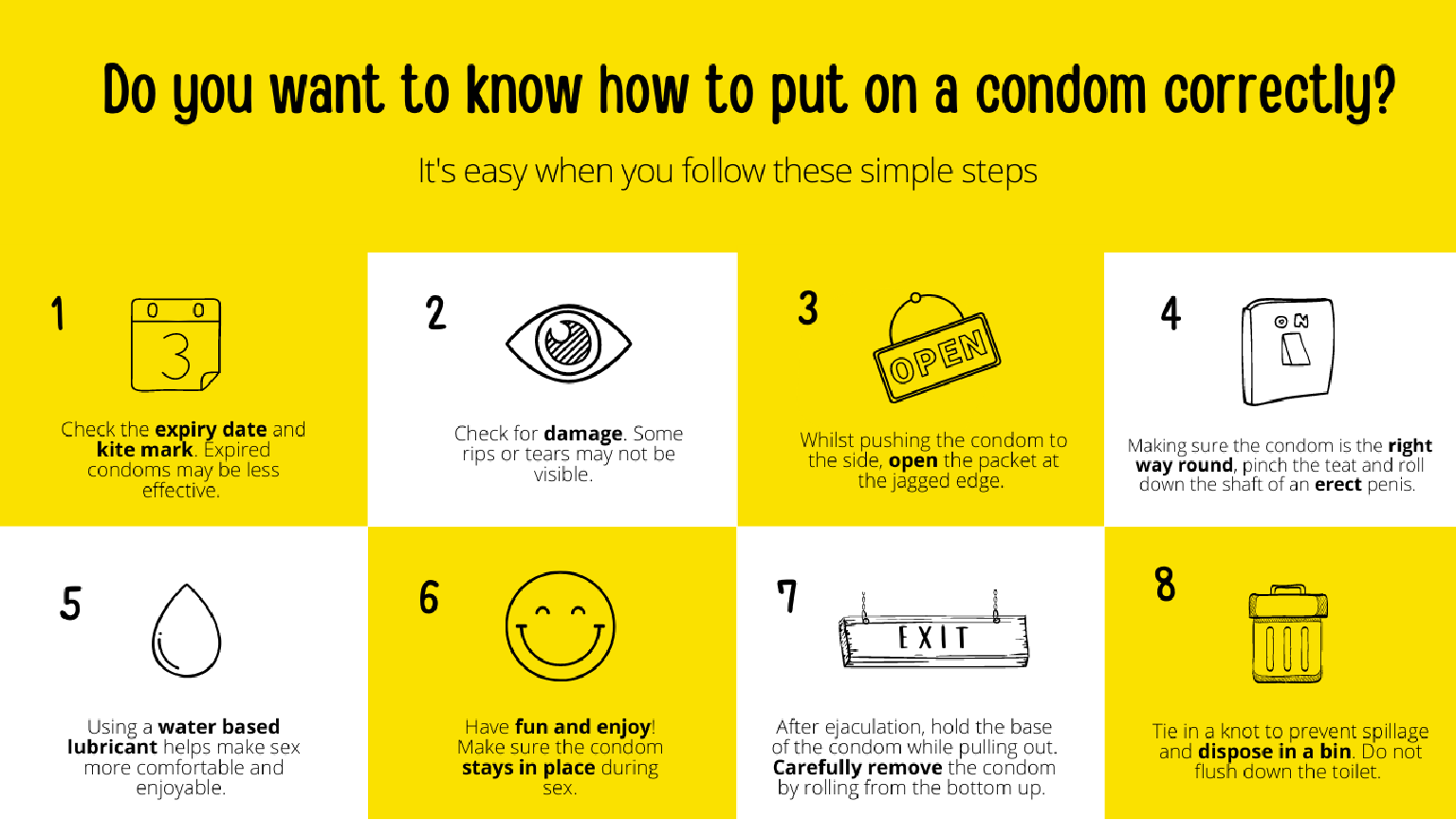
- How do I put on a condom correctly?
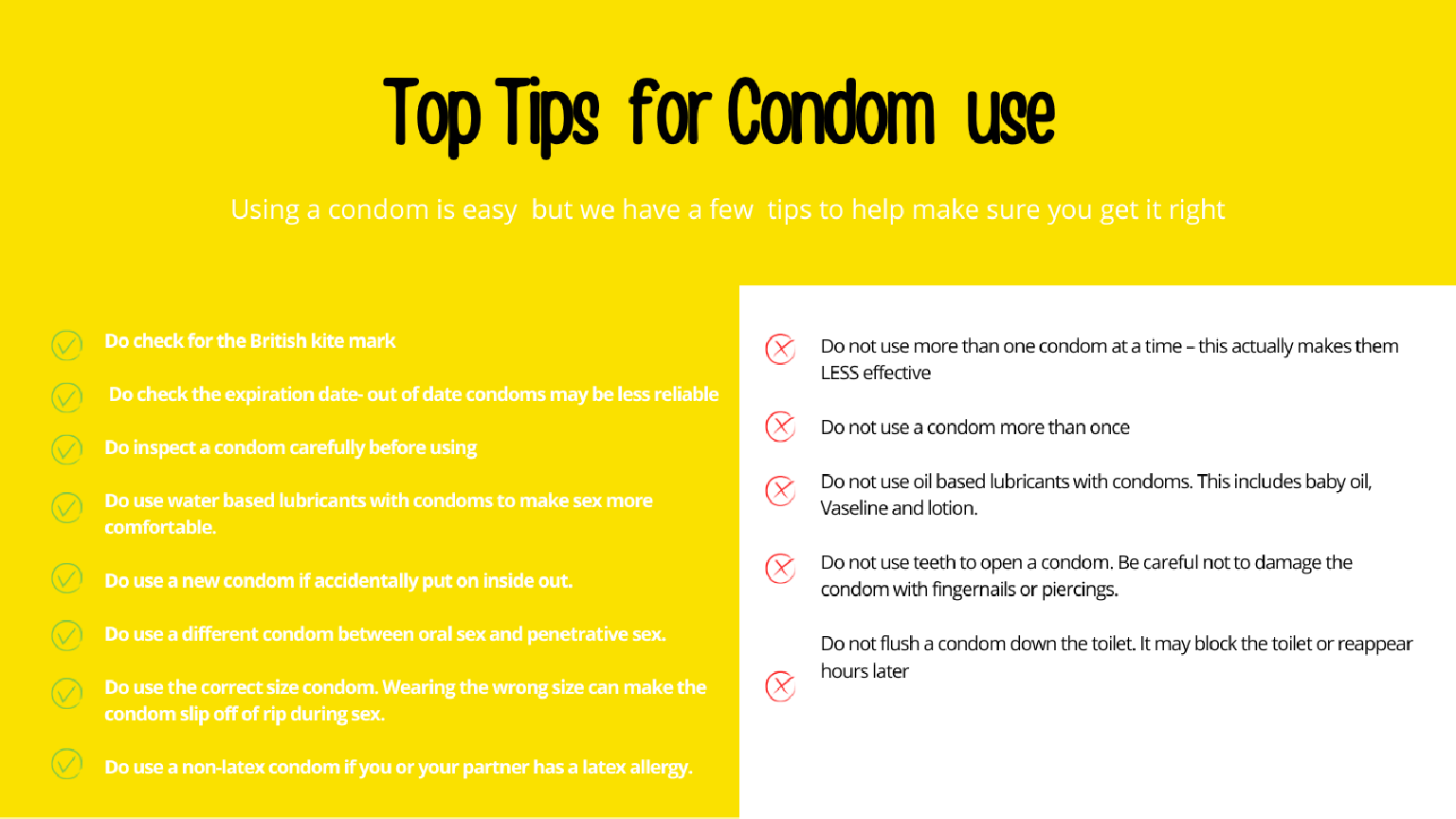
- I need some top tips for using a condom correctly?
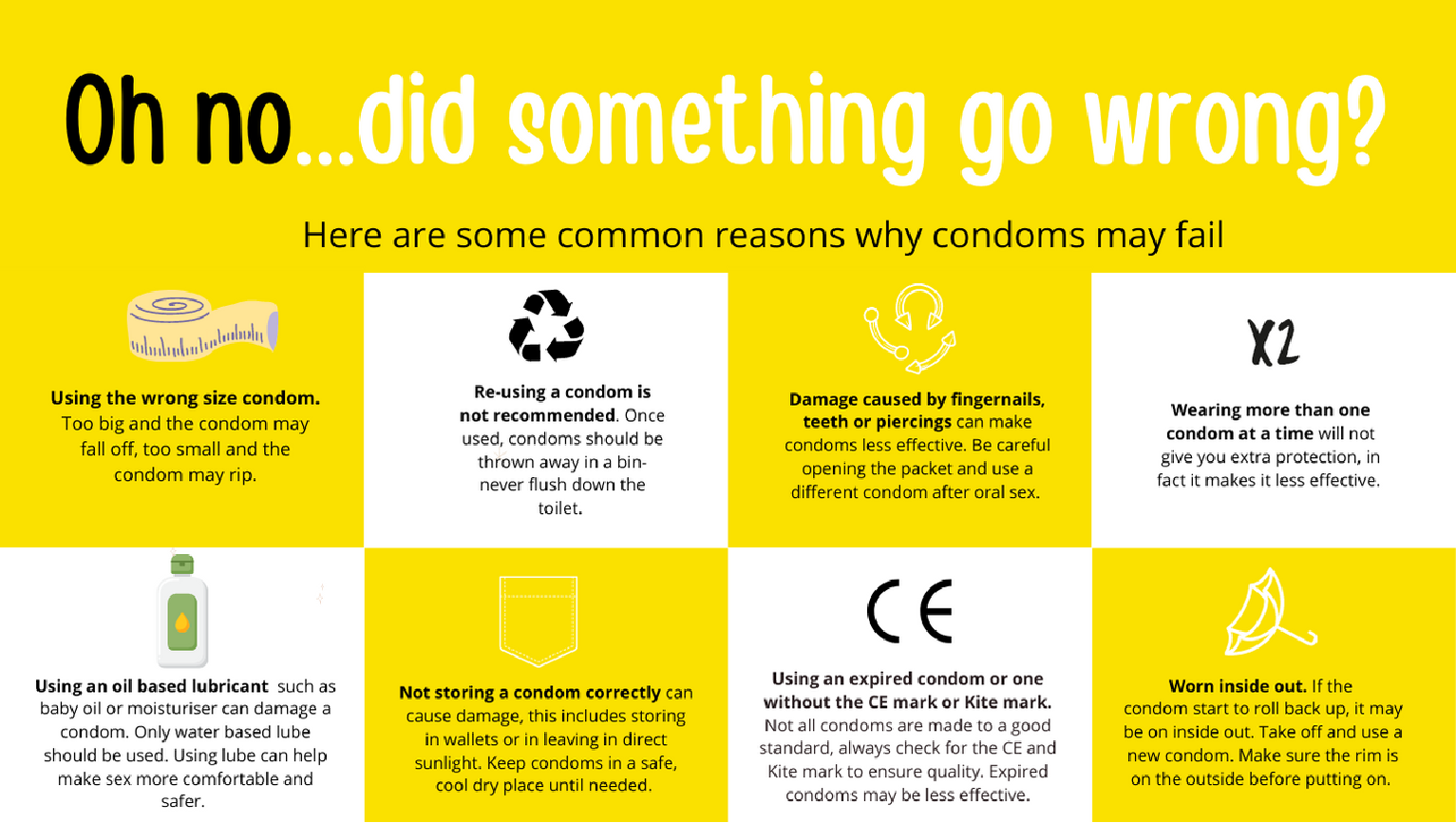
- Why do condoms sometimes break?
- The condom broke, what do we need to do now?
If not used correctly, condoms can tear, slip off or even burst during sex. If a condom breaks we recommend the following advice:
If there is a risk of pregnancy, come to clinic as soon as possible to discuss emergency contraception. Emergency contraception is available up to 5 days (120 hours) after unprotected sex but it is more effective the sooner it is taken. Emergency contraception is also available free from GPs, walk in centres, A&E and most pharmacies.
If you are worried about HIV, come to clinic as soon as possible or call 111. Medication can be offered up to 3 days after sex to help prevent the transmission of HIV.
Call or visit clinic to test for STI's. Remember there are 'window periods' for each infection, so you might not be able to test straight away (read more in STI testing to find out when you should test).
Visit our guide to putting on a condom correctly, this will help reduce the likelihood of condoms breaking in future.